Energy bills, sustainability goals and the need for resilience are reshaping how Bedford households and businesses power their lives. Modern battery storage turns intermittent solar into round-the-clock energy, shifts usage to cheaper tariffs and safeguards critical circuits when the grid falters. Whether you’re in a town-centre terrace, a new-build on the edge of Bedford, or running a busy warehouse in Kempston, the right system can deliver meaningful savings, lower carbon and better control. Here’s how battery storage in Bedford works, why it matters, and what to consider when planning a professional installation.
Why Battery Storage Matters in Bedford’s Homes and Businesses
Bedford’s energy landscape is changing fast. Households face variable tariffs, EV charging needs and the desire to squeeze more value from rooftop solar. Battery storage addresses all three. During sunny hours, batteries capture surplus generation that would otherwise be exported at a modest Smart Export Guarantee (SEG) rate. That energy can then power your evening peaks—cooking, entertainment and heating support—boosting self-consumption and shrinking imports. Even without solar, batteries let you charge on off-peak or time-of-use tariffs and discharge during higher-price periods, flattening bills and adding a layer of price resilience. For many Bedford homes, the result is a tangible reduction in grid reliance and more predictable costs.
Local businesses across Bedfordshire are also benefiting. Retail units, offices and light industrial sites often face demand spikes when machinery starts up or when staff return from breaks. Batteries can smooth those peaks, helping avoid costly maximum demand charges and supporting critical operations when the grid wobbles. While widespread, long-duration outages are rare, momentary dips or disruptions still matter—especially for servers, lighting and safety systems. With the correct inverter and backup configuration, batteries can maintain selected circuits, supporting business continuity and customer experience in the moments that count.
There’s an environmental upside too. Pairing solar PV with batteries supports local decarbonisation by making better use of clean energy when it’s generated. The Bedford area’s growing number of EVs and heat pumps further increases the value of storing cheap, green electricity for later use. When planned and installed to current regulations, battery storage is not just a gadget—it’s a strategic upgrade that aligns comfort, cost and sustainability for homes and organisations intent on long-term efficiency.
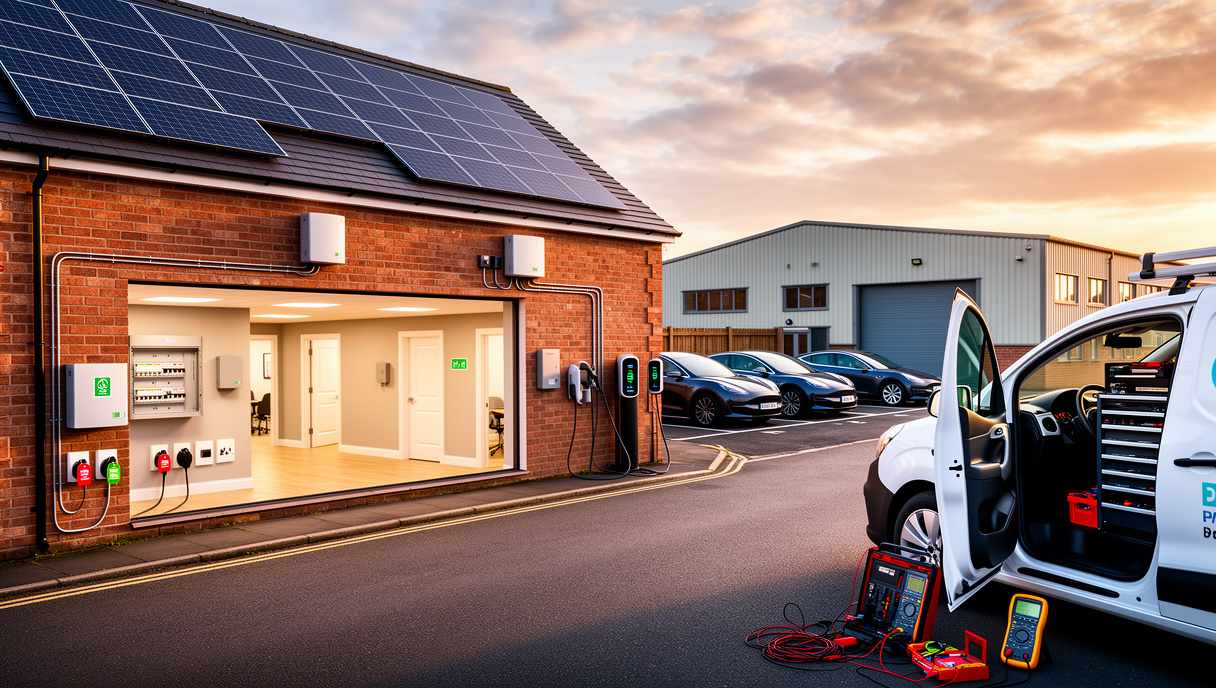
How a Professional Battery Installation Works: From Survey to Smart Savings
Every successful project in Bedford starts with a detailed survey. A qualified electrician will review your existing consumer unit, meter location, bonding and earthing arrangements, and any solar PV you already have. They’ll profile your energy usage—ideally with smart meter interval data—to size the battery and inverter correctly. For example, a household with evening-heavy demand and a 4 kW PV array might benefit from a 5–10 kWh battery and a hybrid inverter, while a commercial site with short, intense peaks could favour higher power output and modular storage. Safety and compliance are central: systems must align with BS 7671 (IET Wiring Regulations), the building environment, and the Distribution Network Operator’s G98/G99 requirements for grid-connected generation.
If you’re adding storage to an existing PV system, the installer will evaluate AC-coupled versus DC-coupled approaches. AC-coupled batteries are flexible for retrofits and can sit alongside your current inverter; DC-coupled or hybrid solutions are often more efficient for new solar-plus-battery projects. Location matters: garages, utility rooms and well-ventilated plant areas are typical, with clearances and cable routes planned for both safety and aesthetics. After design sign-off, your installer will manage DNO notifications, schedule the works, and complete the fit-out, commissioning and testing. You’ll receive handover documentation, including test results, user guidance and warranties—plus any relevant electrical certification for domestic or commercial premises.
Once live, you’ll control and monitor the system via a smart app. You can prioritise self-consumption, enable off-peak charging, cap grid exports or activate backup (when specified). Many systems can be tuned for dynamic tariffs, set seasonal strategies (e.g., winter peak-shaving) and coordinate with EV chargers or heat pumps. A good installer will return for a post-install optimisation check, review initial data trends and make fine adjustments. If you’re exploring options or want tailored advice for your property, local specialists in Battery Storage in Bedford can help design a system that fits your usage patterns and future plans.
Choosing the Right System: Capacity, Brands, Tariffs and Real-World Bedford Examples
Start with capacity. Home batteries typically range from 5 to 15 kWh, while commercial systems can be scaled much larger. The goal is to cover a meaningful portion of your evening and morning demand without oversizing. A useful rule-of-thumb is to match approximate daily surplus solar (or off-peak purchase volume) to a battery you can reliably cycle most days of the year. Power rating matters as much as capacity: a 3–5 kW inverter suits many homes, but properties with high simultaneous loads—or businesses with machinery—may prefer higher power to avoid pulling from the grid during spikes. Think about future electrification too. If an EV, heat pump or home office is on the horizon, build headroom into your plan.
Most Bedford projects gravitate to proven systems from established brands. Options include hybrid inverters that combine PV and battery control, stackable modular batteries for flexible growth, and premium all-in-one units with robust backup capability. Look for strong warranties (often 10 years), clear cycle life specifications and reliable support. Integration is key: batteries that communicate with your inverter, smart meter and tariff data will unlock the most value. When available, dynamic or time-of-use tariffs let you charge at off-peak rates and discharge when prices rise; combined with SEG export from solar, this can materially improve the payback. While results vary, many households see a 20–40% reduction in grid imports, with faster returns for homes that already have solar or access to favourable overnight rates.
Real-world scenarios highlight what’s possible in Bedford. A Victorian terrace near the town centre with a 3.6 kW PV system and a 5–7 kWh battery can significantly lift self-consumption, turning sunny midday generation into evening meals and device charging. A family in Brickhill with a larger 4–5 kW array and a 10 kWh battery may pair off-peak tariff charging with weekend EV top-ups, smoothing bills and cutting peak imports. On the commercial side, a light industrial unit in Kempston might install a 20–30 kWh modular bank to clip midday demand spikes from compressors or CNC tools, reducing maximum demand charges and supporting uptime. In education and community settings—think schools in Biddenham or village halls in North Bedfordshire—batteries can stabilise usage profiles, help manage solar variability and keep essential circuits powered during short grid disturbances when backup functionality is included. With the right design, commissioning and optimisation, battery storage becomes a practical, future-ready asset for Bedford’s diverse properties.

A Pampas-raised agronomist turned Copenhagen climate-tech analyst, Mat blogs on vertical farming, Nordic jazz drumming, and mindfulness hacks for remote teams. He restores vintage accordions, bikes everywhere—rain or shine—and rates espresso shots on a 100-point spreadsheet.