The cuvette spectrophotometer continues to anchor analytical workflows across life sciences, pharmaceutical development, environmental testing, and industrial quality control. At its core, this instrument translates the interaction between light and a liquid sample into quantitative, reproducible data that drives critical decisions—from determining DNA purity to verifying the concentration of active ingredients in a finished drug product. Today’s high-performance devices, engineered by specialist manufacturers who live and breathe optical precision, have transformed what a cuvette-based system can achieve. With faster scanning speeds, advanced software integration, and the ability to combine micro-volume and cuvette measurements in a single footprint, the modern cuvette spectrophotometer delivers a level of flexibility that aligns perfectly with demanding, multi-user laboratory environments.
The Science Behind Cuvette Spectrophotometry: How It Works
At the heart of every cuvette spectrophotometer lies the fundamental principle of UV/Vis spectroscopy: molecules absorb light at characteristic wavelengths, and the amount of light absorbed is directly proportional to the concentration of the absorbing species in solution. In practical terms, the instrument passes a beam of light—either a single wavelength or a scanned spectrum—through a cuvette containing the sample. A detector on the opposite side measures the intensity of the transmitted light, and the instrument calculates the absorbance (A) based on the ratio of incident light (I₀) to transmitted light (I). This relationship is elegantly captured by the Beer‑Lambert law, A = εcl, where ε is the molar absorptivity of the substance, c is the concentration, and l is the path length of the cuvette—typically 10 mm in standard configurations.
What makes a cuvette spectrophotometer such a reliable workhorse is the stability and reproducibility of this optical path. The instrument’s optical bench usually comprises a light source (often a xenon flash lamp or a combination of deuterium and tungsten halogen lamps for full UV/Vis coverage), a monochromator to select precise wavelengths, and the sample compartment that holds the cuvette in a fixed position. High‑end systems, such as those developed by Implen, employ a long‑life xenon source and a precision‑aligned optical geometry that minimizes stray light and ensures photometric accuracy across the entire 190–1100 nm range. This robust design enables the cuvette spectrophotometer to measure not only static absorbance values but also time‑resolved kinetic assays, where the absorbance changes over seconds or minutes are recorded continuously.
The choice of cuvette material is another critical factor. For measurements in the UV region below 340 nm, only quartz or specialized UV‑transparent plastics can be used, as standard glass and most polymers absorb strongly and introduce error. In the visible range, disposable polystyrene or glass cuvettes provide a convenient, cost‑effective alternative. Regardless of the consumable, the cuvette must be free of scratches and positioned consistently to avoid path‑length variability. Modern cuvette spectrophotometer software often includes a path‑length correction feature and automatic recognition of micro‑cuvette adapters, further safeguarding data integrity. By combining optical precision with intelligent software, today’s instruments empower researchers to focus on the science behind the sample, confident that the measured absorbance is both accurate and repeatable.
Real-World Applications: From Life Sciences to Industrial Quality Control
Few analytical techniques rival the breadth of applications served by the cuvette spectrophotometer. In molecular biology and biochemistry laboratories, one of the most routine yet essential tasks is measuring bacterial cell density at 600 nm (OD600) to monitor culture growth. While micro‑volume systems have revolutionized nucleic acid and protein quantification for precious samples, the cuvette format remains indispensable for colorimetric assays—Bradford, BCA, Lowry, and enzyme‑linked procedures—where larger volumes and precisely controlled reaction conditions are required. With a thermostatted cuvette holder, researchers can perform enzyme kinetics at exactly 37 °C, recording absorbance changes over time to calculate Michaelis‑Menten parameters. The cuvette spectrophotometer thus becomes a central hub for characterizing catalytic activity, substrate specificity, and inhibitor effects.
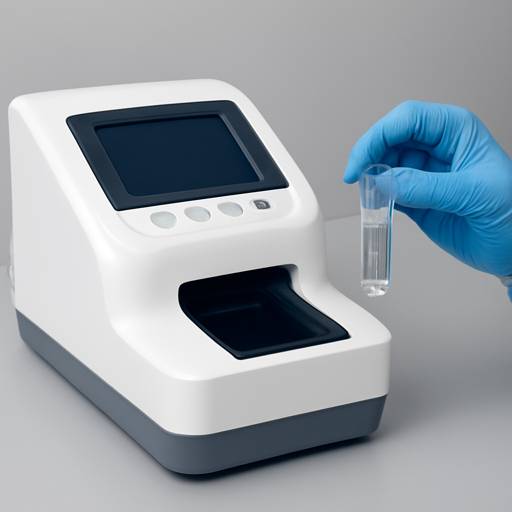
Pharmaceutical quality control relies heavily on cuvette‑based UV/Vis methods. Pharmacopoeias prescribe dissolution testing and active pharmaceutical ingredient (API) quantification protocols that utilise fixed‑wavelength absorbance readings or full‑spectrum scans in a 1 cm cuvette. The validated linearity, accuracy, and precision of a high‑quality cuvette spectrophotometer are non‑negotiable in a regulated environment. Similarly, environmental laboratories depend on cuvette spectrophotometers to quantify nitrates, phosphates, ammonia, and heavy metals via colorimetric reagents. The standardization of these methods across the globe means that a water analysis lab in Munich, a pharmaceutical facility in California, and a research institute in Beijing can compare results with confidence—provided their instruments are built to exacting, reproducible standards.
Industrial applications further highlight the versatility of this technology. Food and beverage producers use cuvette spectrophotometry to measure colour intensity (e.g., beer colour in EBC units), determine sugar profiles through enzymatic test kits, and verify nutrient levels. In chemical manufacturing, absorbance measurements at specific wavelengths monitor dye concentration, optical brightener levels, and the progress of photochemical reactions. An instrument that combines the cuvette port with integrated methods and automatic wavelength selection simplifies these workflows considerably. For labs that also require micro‑volume quantification—say, for DNA or RNA before next‑generation sequencing—a single versatile platform eliminates the need for two separate spectrophotometers. This is where modern solutions like the Implen NanoPhotometer series have redefined the cuvette spectrophotometer category, offering seamless switching between cuvette and micro‑volume modes without any hardware change, thereby conserving both bench space and budget while delivering uncompromised data quality in each format.
Selecting the Optimal Cuvette Spectrophotometer: Key Features and Considerations
Choosing the right cuvette spectrophotometer for a specific laboratory demands careful evaluation of performance parameters, operational requirements, and future flexibility. One of the first specifications to examine is the wavelength range: a full UV/Vis range from 190 to 1100 nm is essential if you work with nucleic acids, proteins, or organic compounds that absorb in the low UV. Equally important is the spectral bandwidth—typically between 1 and 5 nm—which defines the instrument’s ability to resolve closely spaced peaks. A narrower bandwidth improves resolution for fine‑structure analysis, while a wider bandwidth can increase signal‑to‑noise ratio for routine quantifications. Photometric accuracy and stray light specifications directly determine how reliably the instrument can measure high absorbance values; a stray light figure of less than 0.05% at 220 nm (using a NaI cutoff filter) is a hallmark of a high‑performance optical design.
Beyond the optical parameters, the practical aspects of the cuvette compartment and consumables play an outsized role in daily usability. The ability to accommodate standard 10 mm rectangular cuvettes, semi‑micro and ultra‑micro cells, and even cylindrical test tubes with an appropriate adapter greatly expands the range of applications. If your protocols involve temperature‑sensitive enzyme reactions, a Peltier‑controlled cuvette holder that can maintain temperatures from 15 °C to 40 °C with high precision is a must‑have feature. Single‑beam instruments, which measure the sample and reference sequentially, offer simplicity and excellent energy throughput, while double‑beam optics continuously compare sample and reference channels, compensating for lamp fluctuations and drift—an advantage for long‑term kinetic studies.
In today’s connected laboratory, software capabilities are just as decisive as the hardware. Look for a system that provides guided method creation, automated wavelength scanning, seamless data export to LIMS or Excel, and compliance support such as 21 CFR Part 11 for regulated environments. The true turning point for many multi‑purpose labs, however, is the emergence of hybrid instruments that do not force a compromise between cuvette‑based assays and low‑volume analysis. For laboratories performing both trace nucleic acid quantification and traditional colorimetric assays, a versatile cuvette Spectrophotometer that also offers micro‑volume capability can replace two separate devices, reducing costs and bench space. Implen’s NanoPhotometer systems, for example, integrate a high‑resolution cuvette port with patented micro‑volume optics in a single compact unit, enabling a full‑spectrum scan from 190 to 1100 nm in just a few seconds regardless of the sample format. The built‑in software automatically recognizes the measurement mode and applies appropriate path‑length corrections, ensuring that a Bradford assay in a 1 cm cuvette and a 2 µL DNA sample on the micro‑volume pedestal both yield trustworthy, publication‑ready data.
Finally, consider the long‑term partnership behind the instrument. A cuvette spectrophotometer is an investment that should be backed by responsive technical support, comprehensive warranty coverage, and a clear roadmap for service and calibration. Manufacturers with a strong global presence and a dedicated focus on spectroscopy—rather than instruments being one small part of a vast portfolio—often provide the most knowledgeable assistance and the fastest turnaround when questions arise. This support ecosystem, combined with robust engineering and thoughtful feature integration, is what ultimately transforms a spec sheet into a dependable daily driver that keeps research, quality control, and industrial monitoring moving forward with unwavering precision.

A Pampas-raised agronomist turned Copenhagen climate-tech analyst, Mat blogs on vertical farming, Nordic jazz drumming, and mindfulness hacks for remote teams. He restores vintage accordions, bikes everywhere—rain or shine—and rates espresso shots on a 100-point spreadsheet.