What defines a high‑quality B2B data provider in Europe
Choosing a European partner for company intelligence is very different from picking a generic global list vendor. The best results come from providers that source data directly from official registries, gazettes, and reputable public datasets across the EU and EEA. That foundation matters because European markets are dense, highly regulated, and multilingual, and because business identities shift quickly through incorporations, renamings, mergers, and cross‑border expansions. A strong B2B data partner standardizes those moving parts into a consistent schema—normalizing company names, legal forms, addresses, and NACE industry codes—so teams can search, compare, and enrich records with confidence.
Coverage quality should be evaluated on breadth and depth. Breadth means inclusive EU/EEA reach, with identifier harmonization across VAT numbers, national registration codes, and (where available) LEI references. Depth means structured fields that go beyond a phone and a name: registration status, foundation date, directors and representatives, workforce size bands, revenue ranges or financial statements where public, parent‑subsidiary links, activity classifications, and regional tags such as NUTS levels. Together, these elements allow precise segmentation—whether you’re targeting mid‑sized manufacturers in Northern Italy, fintechs registered in Lithuania, or renewable energy installers in Iberia.
Freshness and accuracy are non‑negotiable. European company data changes at the source; a leading provider will document refresh cycles by country, publish update timestamps, and maintain rigorous entity resolution to reduce duplicates and false positives. Look for transparent data lineage, field‑level provenance, and clear definitions. Data should be GDPR‑compliant with a lawful basis for processing, strong security, and EU‑resident hosting where feasible. If you intend to contact prospects, you’ll want guidance on permissible use, opt‑out handling, and audit trails that demonstrate responsible processing practices.
Finally, usability distinguishes modern platforms. Powerful search with multilingual and diacritic‑aware matching, flexible filters (industry, size, region, status), and exports are essential. So are API and bulk delivery options that fit into your CRM, CDP, or data warehouse. Documentation, sample data, and fair usage limits accelerate time‑to‑value. If you’re considering options, a platform positioned as a comprehensive B2B data provider europe can centralize open and official business records, standardize them across jurisdictions, and expose that intelligence through search, APIs, and bulk files—reducing the need to stitch dozens of country sources yourself.
Real‑world scenarios: Sales, marketing, compliance, and market intelligence
Sales teams expanding in Europe face a familiar challenge: fragmented data. A strong European B2B dataset makes prospecting deliberate and measurable. Imagine a SaaS firm in Vilnius planning a DACH push. Using standardized NACE codes and workforce bands, the team isolates mid‑market logistics companies in Bavaria and North Rhine‑Westphalia, filters for active status and recent growth indicators, and exports decision‑maker roles where lawful to contact. The result is a high‑fit account list that feeds account‑based marketing and outbound motions, with cleaner deduplication in the CRM because national identifiers and VAT IDs are already aligned.
Marketing operations benefit from the same precision. Instead of chasing generic “manufacturing” segments, they refine ICP definitions to the level of “manufacture of instruments and appliances for measuring, testing and navigation” across Sweden and Denmark, with regional layers for metro areas. Enrichment via API automatically fills gaps—company size, registration age, or group structure—powering lead routing and scoring models that reflect the European landscape, not just North American heuristics. As the database refreshes, stale accounts are flagged or reclassified, keeping funnel analytics honest.
Risk and compliance teams rely on authoritative signals even more. Supplier onboarding and due diligence require confirmation of registration status, representation rights, and possible red flags such as insolvency filings. With a European‑native provider, procurement can verify entities in France and Poland using consistent fields, link subsidiaries to ultimate parents, and archive snapshots for audit. Fintechs and financial services firms layer this with their KYC/AML checks, using registry‑sourced identifiers to reduce false matches and to produce clean audit trails that align with local regulators’ expectations.
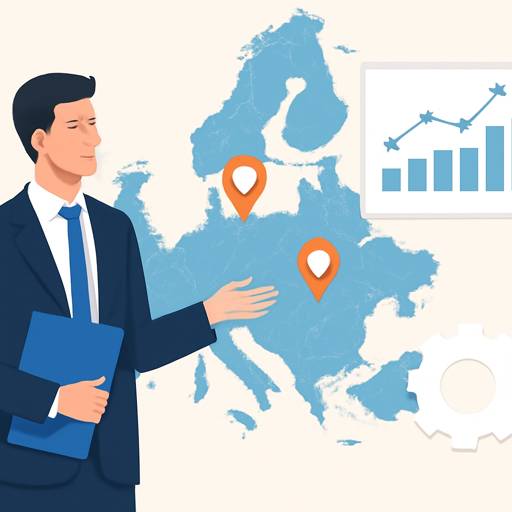
Market analysts and corporate strategy groups can use the same data to quantify opportunity and risk by region. Standardized NUTS geographies and harmonized industry codes allow pan‑European heatmaps: for instance, mapping the density of renewable energy installers per 100,000 companies across Iberia, then correlating it with investment patterns or workforce trends. Because the data model is consistent, analysts can compare business demographics across countries without spending weeks on reformatting. When combined with public tenders, funding announcements, or regional development programs, such a dataset becomes a strategic lens into emerging sectors.
Even operational teams gain efficiency. Customer support updates company records programmatically; finance validates VAT numbers at scale; partnerships verify the legitimacy of potential resellers; and legal keeps governance clean with logs showing when and how data was obtained. Across these scenarios, the critical thread is dependable, standardized, and up‑to‑date European company information delivered in ways that match how teams actually work.
How to evaluate providers: questions to ask and steps to integrate
Assessing European B2B data is simpler when you apply a structured checklist. Start with coverage. Which countries are included today, how frequently is each refreshed, and what gaps remain? Ask for country‑by‑country documentation that lists sources, refresh cadence, and significant field differences. Insist on transparent definitions for “active” versus “inactive” companies, and understand how dissolutions, mergers, and spin‑offs are handled in entity resolution. If your goals depend on hierarchy analysis, confirm how parents, subsidiaries, and cross‑border branches are recognized and linked.
Evaluate standardization next. Are NACE codes normalized uniformly? How does the provider treat legacy classifications? Are addresses parsed into consistent fields with geocoding and diacritic‑aware matching? What’s the approach to multilingual search, transliteration, and alias handling for companies operating under multiple languages? Probe for field‑level provenance: which attributes come from registry A versus gazette B, and when were they last seen at the source?
Compliance and security are core to European operations. Request data processing agreements, details on security posture, and the lawful basis for processing. If you’ll conduct outreach, seek guidance on permissible purpose, documentation of legitimate interests assessments, suppression lists, and mechanisms to honor rights requests. Clarify hosting locations and backup policies to align with data residency preferences.
Integration determines time‑to‑value. Explore API capabilities, rate limits, webhooks for change notifications, and bulk delivery formats (CSV, Parquet) suitable for warehouses. Check whether identifiers (national registry, VAT, LEI) are available for deterministic matching with your CRM. Ideally, you’ll run a proof of concept: share a sample of existing accounts, measure match rate, fill rate for critical fields, and duplicate reduction. Define success criteria in advance—e.g., 85% match on target markets, 70% enrichment for workforce size, and daily updates for top countries—and validate against those benchmarks.
Operationalize with governance. Map fields from the provider’s schema into your CRM or CDP; set precedence rules so authoritative sources overwrite vendor‑supplied values only when appropriate; and create audit logs for each enrichment event. Train users on European‑specific nuances such as legal form abbreviations, regional tiers, and the difference between headquarters and branches. Finally, model ROI realistically: quantify time saved from manual registry lookups, improvement in lead conversion from better ICP targeting, fewer compliance exceptions during onboarding, and reduction in list decay due to faster updates. When a provider demonstrates robust coverage, transparent lineage, compliant processing, and seamless delivery, you gain a durable data asset—one that continuously compounds value across sales, marketing, risk, and strategy in Europe.

A Pampas-raised agronomist turned Copenhagen climate-tech analyst, Mat blogs on vertical farming, Nordic jazz drumming, and mindfulness hacks for remote teams. He restores vintage accordions, bikes everywhere—rain or shine—and rates espresso shots on a 100-point spreadsheet.