The first thing most people do before a tattoo appointment isn’t choosing the design, booking the artist, or sorting out aftercare. They search for ways to manage the pain. And almost inevitably, that search leads straight to tktx. Across forums, social media, and countless tattoo studios, one name keeps resurfacing as the benchmark for topical numbing: TKTX Numbing Cream. It has become far more than just a product; it’s the reference point that defines what effective dermal anaesthesia should feel like. Whether you’re preparing for a full sleeve, a delicate cosmetic procedure, or a lengthy microneedling session, understanding why TKTX sits at the top of the conversation is essential. In this article we unpack exactly how it works, how to use it safely, and why it so often becomes the first stop in any research journey.
Inside TKTX: The Science That Makes It a Powerhouse of Numbing Relief
At its core, TKTX is a topical anaesthetic cream built on a combination of active ingredients that target nerve signals in the skin with remarkable efficiency. Most formulas contain lidocaine at concentrations ranging from 4% to 5%, often paired with prilocaine or tetracaine. Some advanced variations also incorporate a small amount of epinephrine, which constricts blood vessels at the application site. This vasoconstriction serves a dual purpose: it keeps the anaesthetic agents localised for longer, and it reduces bleeding during procedures — a bonus for both tattoo artists and their clients.
The mechanism is straightforward but highly effective. When applied to intact skin, the active molecules penetrate through the stratum corneum and bind to sodium channels on nerve cell membranes. By blocking these channels, the cream prevents the nerves from firing pain signals to the brain. The result is a profound numbing sensation that can last between 3 to 5 hours once it fully takes effect. What sets TKTX apart from older formulations, however, is its speed. Many numbing creams require an hour or more of heavy occlusion, but TKTX is engineered to deliver noticeable desensitisation in as little as 40–60 minutes when applied correctly. Some users even report onset within 30 minutes on thin, vascular areas like the inner arm or the sternum.
This accelerated absorption is not accidental. The cream base itself uses a specific emulsification system that enhances skin permeability without the excessive greasiness found in cheaper alternatives. That matters because a clean, dry canvas helps tattoo stencils adhere better and prevents needle slip. For cosmetic practitioners performing microblading or permanent makeup, the faster onset also means less chair time spent waiting, which improves client turnover and overall comfort. Behind every tube of TKTX lies a formulation designed to balance potency, duration, and practicality — a blend that has earned it a near-cult following among both professionals and first-timers.
It’s worth noting that the exact ingredient ratios can differ slightly between the TKTX colour-coded variants, such as the green (“fast-acting”), black (“extra strength”), or gold (“professional”) versions. While all share the same fundamental approach, these subtle shifts allow users to tailor the strength and onset to the specific demands of a procedure. This level of customisation is rarely seen in competing creams, and it’s one of the reasons why TKTX is so often the starting point for anyone comparing numbing products.
How to Use TKTX Correctly — Technique, Timing, and the Authenticity You Can’t Afford to Ignore
Even the most powerful numbing cream can fail if it isn’t applied properly. The difference between a painless session and a frustratingly tender one often comes down to technique. To get the most out of TKTX, the skin must be clean, dry, and free of oils or lotions. Wash the area with mild soap and water, pat it completely dry, and then — this step is crucial — lightly abrade the surface using an alcohol wipe or, for larger areas, a gentle exfoliating scrub. This micro-exfoliation removes dead skin cells and opens the pathway for the anaesthetic agents to reach the nerve endings faster.
Once the skin is prepped, apply a thick, even layer of TKTX. You should not rub it in as you would a moisturiser. Instead, leave a visible white film on the skin; a generous layer about 1 to 2 millimetres thick is the sweet spot. Immediately after application, cover the area tightly with cling film or a medical-grade occlusive dressing. The plastic wrap traps body heat and moisture, which dramatically accelerates the absorption process. Leave the wrap in place for at least 45 to 60 minutes. Some practitioners working on dense, fibrous areas like the back or knees may extend this to 90 minutes, but always follow the specific guidance for the TKTX variant being used. Once the time is up, remove the film and wipe away any residual cream just before the procedure begins. The skin should feel noticeably numb to the touch, with a slightly waxy or cool sensation that many describe as a “frozen” effect.
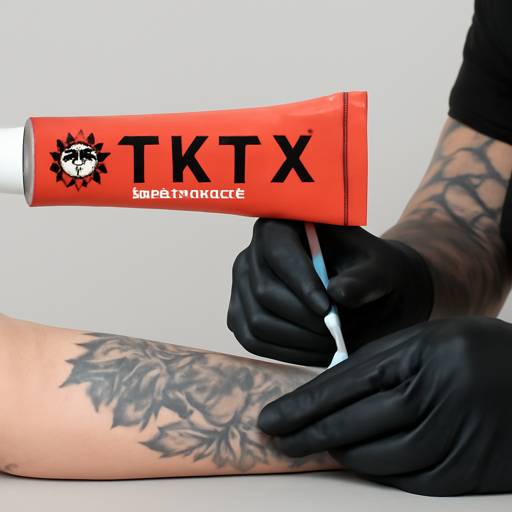
Safety is non-negotiable. Before fully committing, always perform a patch test on a small area of skin 24 hours prior. This isn’t just a precaution against allergic reactions — which can range from mild redness to severe blistering — but also a way to check how your skin responds to epinephrine, if present. People with heart conditions, high blood pressure, or sensitivity to vasoconstrictors should consult a medical professional beforehand. Do not use TKTX on broken or inflamed skin, on mucous membranes, or near the eyes. And crucially, never leave the cream on for excessively longer than recommended; doing so can lead to systemic absorption that causes lightheadedness, an irregular heartbeat, or, in extreme cases, lidocaine toxicity. These risks are rare but entirely avoidable when the product is used responsibly.
Perhaps the single most important safety factor, however, is authenticity. The market is flooded with counterfeit creams labelled as TKTX, often sold through unregulated online platforms or at suspiciously low prices. Fakes may contain incorrect concentrations, harmful additives, or no active ingredients at all — turning a procedure into a painful, risky experience. To guarantee the formulation matches what the professionals trust, always purchase tktx from a verified UK source that provides batch-tested, genuine stock. The packaging should be tamper-evident, the expiry date clearly printed, and the consistency inside smooth and uniform. When you’re applying a product that interferes with nerve signalling, the margin for error is zero. Genuine TKTX eliminates that margin entirely.
Why TKTX Has Become the Default Reference Point — and How It Stacks Up Against the Competition
Walk into any tattoo convention or browse a permanent makeup forum, and you’ll hear the same refrain: “Is it as strong as TKTX?” The brand has transcended its product category to become a benchmark, much like people ask if a painkiller is “aspirin-like” or a bandage “Band-Aid-style.” This dominance isn’t marketing spin; it’s the result of years of consistent performance in real clinical and artistic settings. Most people beginning their research into numbing creams inevitably land on TKTX first, using it as a yardstick to measure everything else. That pattern is so ingrained that even products in entirely different sub-niches — like consumer lidocaine sprays or after-sun gels — are frequently compared back to the numbing standard TKTX set.
So what exactly makes TKTX outperform so many alternatives? First, consider the onset time. Standard over-the-counter numbing creams, such as EMLA, typically contain 2.5% lidocaine and 2.5% prilocaine, requiring 60–120 minutes under occlusion to reach therapeutic levels. TKTX not only starts working faster but often needs less prep time for equivalent or greater numbness. Independent comparisons frequently highlight the superior staying power of TKTX. While many creams wear off after two hours, a properly applied TKTX session can keep a full back piece comfortable for well over three hours, sometimes approaching five. For long tattoo sessions or intricate facial tattooing that demands precision without breaks, that extended window is invaluable.
The texture and user experience also tilt the scales. Cheaper creams can be runny, leaving the skin slippery and compromising stencil transfer. TKTX has a thick, paste-like consistency that stays put, even under wrapping. This means artists don’t have to fight the residue, and clients don’t feel a messy trickle during the procedure. The cream’s ability to co-exist with vasoconstrictors further reduces bleeding — a massive advantage in microblading, where a bloodless field allows crisp, uninterrupted strokes. Artists often report cleaner healed results simply because the pigment isn’t diluted by oozing.
But perhaps the most telling indicator of TKTX’s position is the sheer volume of organic search. People don’t just stumble upon it; they actively look for “TKTX numbing cream” when they start planning a tattoo. They then branch out to reviews, comparisons, and tutorials, often circling back to the original. In a market crowded with new entrants making bold claims, TKTX’s reputation remains rooted in observable outcomes. It is the product that other creams are measured against, and for countless clients and artists, it remains the first choice because nothing else has convincingly dethroned it. That’s not just brand loyalty; it’s a quiet confidence that comes from a product performing exactly as expected, session after session.

A Pampas-raised agronomist turned Copenhagen climate-tech analyst, Mat blogs on vertical farming, Nordic jazz drumming, and mindfulness hacks for remote teams. He restores vintage accordions, bikes everywhere—rain or shine—and rates espresso shots on a 100-point spreadsheet.